After Roe v. Wade, a network of organizations fights to make abortion rights real — not just legal — as opponents mobilize to take them away.
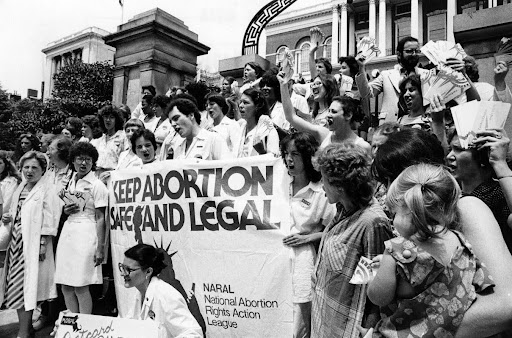
When the Supreme Court decided Roe v. Wade in 1973, it established a constitutional right to abortion, but it did not guarantee access to one. Within three years, Congress passed the Hyde Amendment, cutting off Medicaid funding for abortions. Anti-abortion forces organized, physicians refused to perform procedures, and clinics performing abortions faced lawsuits, harassment, threats, violence, and worse. Norman responded by funding a coordinated ecosystem of organizations that approached the problem from multiple angles, with grants beginning in 1977 and building through the next decade.
On the ground, the Feminist Women’s Health Center of Tallahassee (Norman grantee 1977) opened in 1974 to offer abortion services, pregnancy screenings, and gynecological care to women from Florida, Georgia, and Alabama — 40 percent of whom were Black. In the legal arena, the Center for Constitutional Rights’ Abortion Rights Project (Norman grantee 1977–1979) and the ACLU’s Reproductive Rights Project (Norman grantee 1978–1984) challenged the growing web of restrictions in the courts. The National Abortion Rights Action League Foundation (Norman grantee 1978–1992) worked to build membership for advocacy and political power in targeted states. The Ms. Foundation for Women’s Pro-Choice Project (Norman grantee 1978–1986) provided technical assistance and seed grants to local and statewide groups working to maintain abortion access. The Religious Coalition for Abortion Rights (Norman grantee 1978) and Catholics for a Free Choice (Norman grantee 1979) pushed back against the framing that religious Americans could only hold one position on abortion, articulating the pro-choice views held by many people of faith. Together, these grants reflected a clear-eyed understanding that Roe had opened a door that powerful forces were already working to close, and that defending abortion rights required simultaneous action in courtrooms, clinics, and communities.
Media:
- Southern Exposure Vol.6, No. 2, “Sick for Justice: Health Care and Unhealthy Conditions” article: Tallahassee, Florida: Self-Help Fights Back