Settlement houses on the Lower East Side provide a lifeline for New York’s immigrant communities.
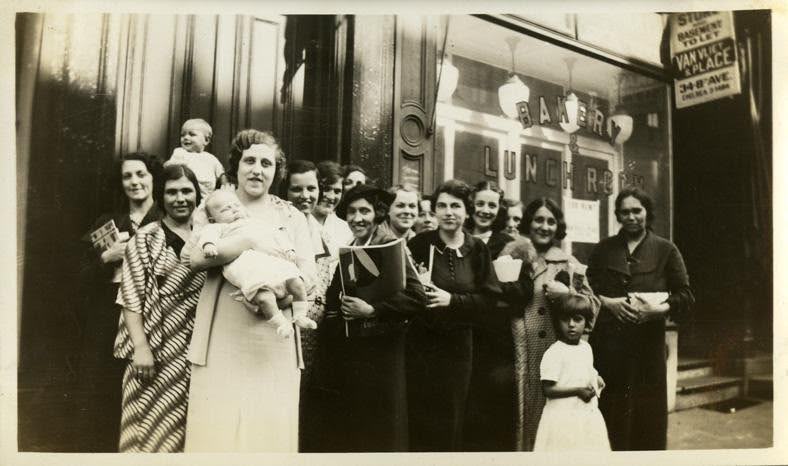
The settlement movement — in which educated reformers moved into impoverished urban neighborhoods to provide direct services and advocate for social change — had its greatest champion in Lillian Wald, a nurse who founded Henry Street Settlement in 1893 after witnessing firsthand the poverty endured by immigrants in New York City’s Lower East Side. Moving into the neighborhood herself, Wald and her colleagues provided healthcare, education and vocational training to the largely Jewish immigrant community that crowded the tenements. She coined the term “public health nurse,” and founded America’s first public school nursing program in 1902.
The Assistance Fund supported Henry Street Settlement (Grantee 1936–1962) and the Grand Street Settlement (Grantee 1936–1957) — both serving the Lower East Side’s immigrant communities — as well as United Neighborhood Houses (Grantee 1936–1959), the umbrella organization coordinating settlement houses across New York City. The fund also supported Henry Street’s Visiting Nurse Service (Grantee 1944–1966), which treated children with polio, provided health education about flu prevention to families, supported pregnant and parenting women, and provided vaccines throughout New York City. In 1944, the nursing program formally separated from Henry Street to become its own independent agency — the Visiting Nurse Service of New York — allowing it to focus and expand its home care mission. By the 1980s, it had become the largest home care provider for AIDS patients in the country, caring for New Yorkers at the epicenter of the epidemic. Today, as VNS Health, it has a team of over 11,500 individuals providing home care, hospice, and behavioral health services to New Yorkers in need.
Media:
- National Library of Medicine: Includes photos of Henry Street Settlement’s Vising Nurse Service