
The Emergency Land Fund fights to reverse a decades-long economic catastrophe: the mass loss of Black-owned land.
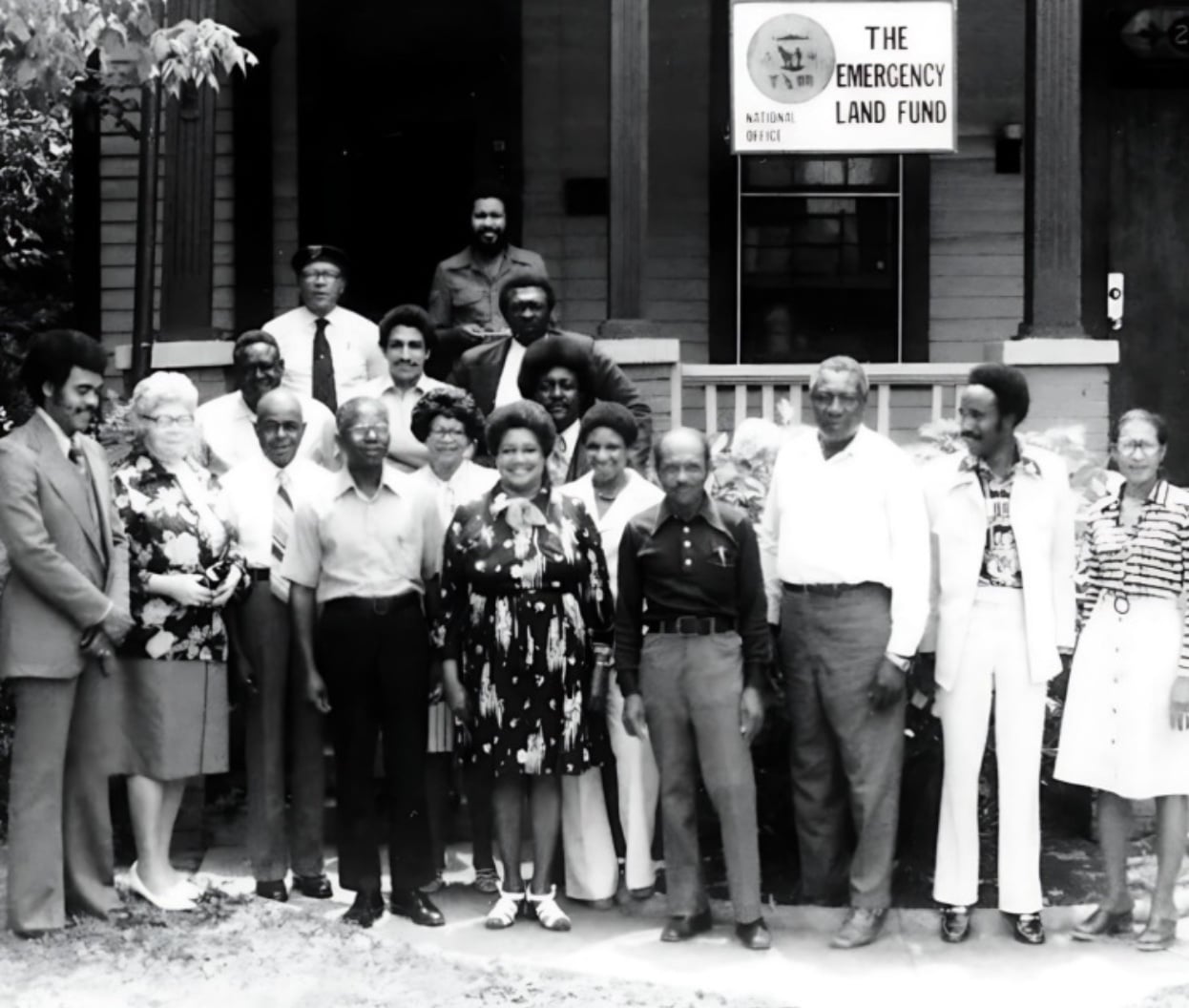
Between 1910 and 1970, Black Americans lost approximately 9 million acres of farmland in the South — a staggering transfer of wealth driven not by market forces alone but by tax sales, predatory legal maneuvers, discriminatory USDA lending, and the particular vulnerability of “heirs’ property”: land passed down through families without formal title that could be seized with devastating ease. The Emergency Land Fund (ELF, Norman grantee 1976–1979) was founded in 1972 by economist Robert S. Browne to document this dispossession and fight back against it.
Norman’s grants funded the practical infrastructure of ELF’s work: a series of legal primers on property law distributed across the South to help Black families understand and defend their land rights; a Mississippi office attorney providing direct legal representation to landowners facing dispossession; and an internship program training the next generation of advocates. This support to ELF was a continuation of Norman’s 1960s support for the Federation of Southern Cooperatives and the Rural Advancement Fund — organizations working to help Black Southerners build economic independence through cooperative farming and land ownership. ELF eventually merged with the Federation of Southern Cooperatives in 1985, which continues to develop self-supporting communities through building cooperative businesses, preserving Black-owned land, and advocating for Black farmers and landowners.
Media:
- Video by The Union of Concerned Scientists: Lost Inheritance – How Black Farmers are Losing Their Land Through Heirs’ Property
- Video by The Atlantic: How Black Americans Were Robbed of Their Land