
The Lafargue Clinic becomes the first Black mental health clinic in the United States and challenges the racism embedded in American psychiatry.
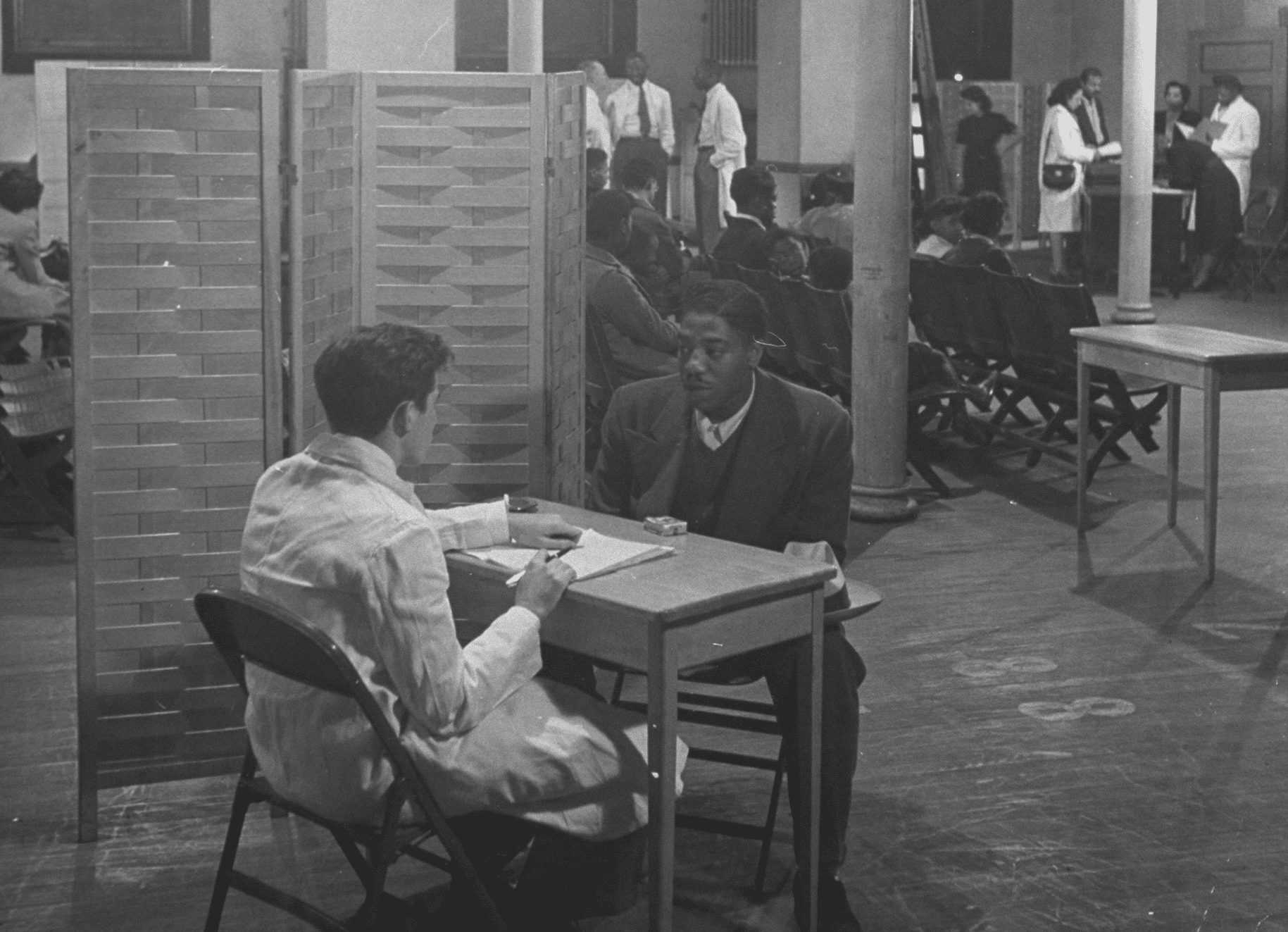
The Lafargue Mental Health Clinic (Norman grantee 1947–1950) was founded in 1946 in the basement of St. Philip’s Episcopal Church in Harlem — the result of Black intellectual activism, progressive psychiatry, and the radical Black church tradition. Psychiatrist Fredric Wertham, director of the mental hygiene clinic at Queens General Hospital, conceived the clinic alongside novelist Richard Wright, journalist Earl Brown, and Reverend Sheldon Hale Bishop of St. Philip’s, who offered the parish house basement as a home for the clinic free of charge. The clinic was named for Paul Lafargue, a Cuban physician, philosopher, and social reformer, and would operate until 1959.
The need was acute: Black New Yorkers in need of psychiatric care could not obtain treatment in most hospitals and clinics due to racial discrimination. The Lafargue Clinic offered a radical alternative: patients of all races were welcome to receive low-cost care — 25 cents per visit, for those who could afford it — with no referrals required. Rather than the traditional focus on individual psychology, the clinic practiced social psychiatry — helping patients cope with the real social conditions shaping their lives, including poverty, racism, and discrimination. By 1947, its all-volunteer staff included fourteen psychiatrists and twelve social workers. The clinic received no public funding and operated entirely on contributions.
In 1951, Lafargue conducted a study of Black and white children in Delaware documenting the mental health damage caused by school segregation. The NAACP used the findings in a Wilmington court case that resulted in Black children being admitted to two previously segregated schools — a victory that fed directly into Brown v. Board of Education. Two years after Norman’s support for Lafargue ended, the fund began supporting the NAACP — whose lawyers would argue Brown v. Board of Education before the Supreme Court in 1954.
Tags: Civil Rights/Civil Liberties, Criminal Justice Reform, Health, Early Funder
Media:
- Leo Baeck Institute – New York | Berlin for the Study of German-Jewish History and Culture: Color on my Mind, The History of the First Black Mental Health Clinic in America
- JSTOR Daily, April 6, 2019: Richard Wright Helped Bring Mental Healthcare to Harlem – The famous novelist worked to fight the psychological cost of Black oppression.