
The Workplace Project proves that immigrant workers can change state law.
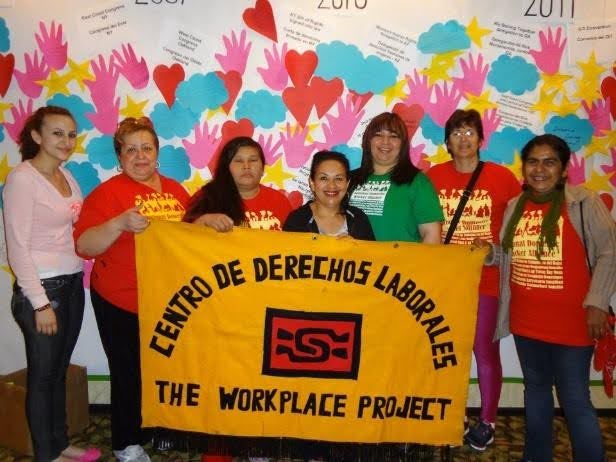
Founded in 1992 in Hempstead, NY, as one of the first worker centers in the country, the Workplace Project (Norman grantee 1994–2003) was established to help end the exploitation of Latino immigrant workers — mostly Salvadoran refugees who had fled the brutal repression and civil war in their country, and Mexican workers with no viable path to survival at home. Members of the Workplace Project were restaurant workers who labored more than seventy hours a week for less than three dollars an hour, landscapers who went weeks without pay, and domestic workers who earned as little as $1.90 an hour for eighty-five-hour workweeks.
By the mid-1990s, the Workplace Project had documented a devastating pattern: of 72 wage cases filed with the New York State Department of Labor over three years, only two — less than 3 percent — resulted in only partial payment to workers. The DOL had one inspector for every 7,000 private workplaces on Long Island, and wage theft penalties were so low that employers calculated it was cheaper for employers to steal wages than to pay them.
In response, Workplace Project members designed the Unpaid Wages Prohibition Act, built a coalition of unlikely allies including Long Island business associations, and lobbied conservative state senators — entirely in Spanish through simultaneous translation headsets — for the Act’s passage, even as the senators they lobbied had previously sponsored anti-immigrant legislation, and the workers who lobbied them could not vote. Governor Pataki signed the Act into law in 1997 and increased civil penalties from 25% to 200% of wages owed, giving New York State the strongest wage enforcement law in the country. That year, the Workplace Project assisted 44% more workers than the year before and recovered a record amount in unpaid wages, becoming a nationally recognized model for worker centers across the country.