Category 1960s Civil Rights/Civil Liberties

The National Committee Against Discrimination in Housing wins a landmark victory with the passage of the Fair Housing Act.

The National Committee Against Discrimination in Housing (NCDH, Norman grantee 1957–1969) was one of the leading advocacy organizations pressing for federal fair housing legislation throughout the 1960s. Founded in 1950 as an alliance of trade unions, churches, and civil rights…
Three interconnected legal organizations take civil rights battles into the courts of the Deep South.

As the movement grew, so did the volume of legal work required to protect demonstrators, challenge discriminatory laws, and press for enforcement of federal protections. Norman supported three interconnected legal organizations: NAACP Legal Defense and Education Fund (Norman grantee 1958–1986):…

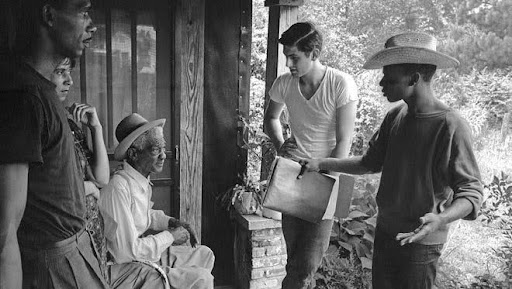
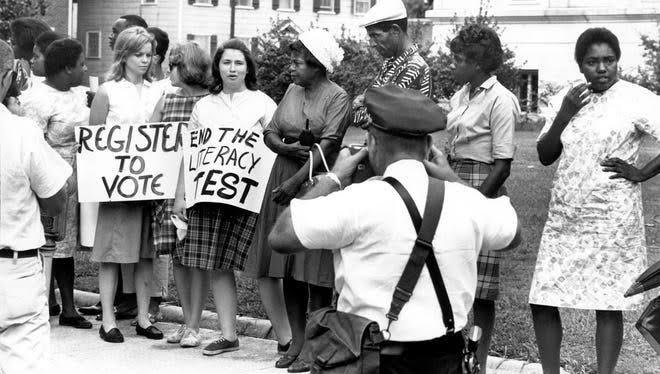
The Selma Literacy Project takes on Alabama’s discriminatory literacy tests, laying groundwork for the 1965 voting rights marches.

In 1963, Dallas County, Alabama — where Selma is the county seat — had 15,000 Black residents of voting age, and fewer than 300 registered Black voters. Working with SNCC and the Northern Student Movement, the US National Student Association…

The Southern Regional Council launches the Voter Education Project, registering hundreds of thousands of Black voters across the South.

The Southern Regional Council (SRC, Norman grantee 1951–1978, 1983, 1987, 1994) was one of the few interracial institutions operating across the South engaging communities on issues of race and democracy. In 1962, at the urging of Attorney General Robert F.…

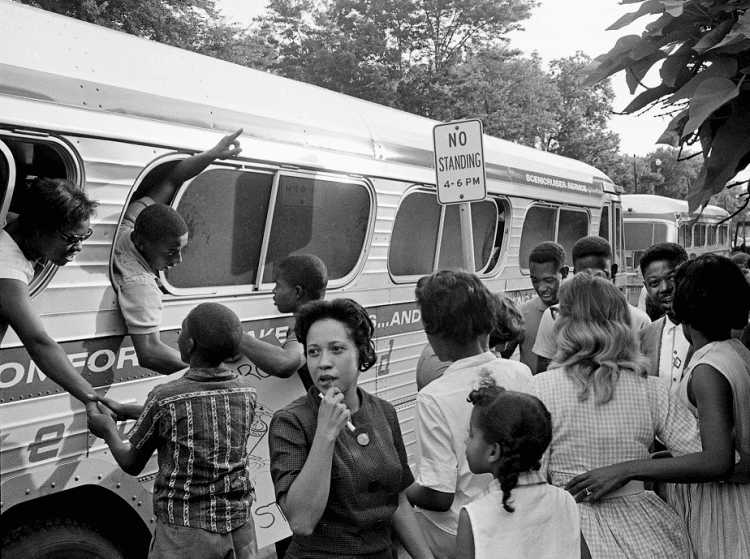
Norman funds the first Freedom Ride with a $35,000 loan to CORE — one of the earliest grants to the frontline civil rights movement.

The Congress of Racial Equality (CORE, Norman grantee 1961–1966) launched the Freedom Rides in May 1961, sending interracial groups of primarily college student activists onto interstate buses to challenge the Supreme Court’s ruling in Boynton v. Virginia that segregation in…